

Mental health is an important part of overall well being. Just as physical health can benefit from regular care and healthy habits, mental well being can also be supported through practical steps taken over time. For people living in Bundaberg, improving mental health may involve making small changes to daily routines, strengthening social connections, seeking professional support, and finding practical ways to manage stress and difficult emotions.
At Life Enhanced Therapies Bundaberg Counselling, we provide counselling support services tailored to help participants work towards their personal goals and enhance their overall well being. Our approach recognizes that every person has different experiences, circumstances, strengths, needs, and aspirations. Improving mental health is therefore not about following one particular formula. It is about identifying practical strategies that are appropriate for the individual and developing them at a manageable pace.
Understand Your Mental Health
One of the first steps towards improving mental health is recognizing how you are feeling and understanding what may be affecting your well being. Stress, relationship difficulties, changes in circumstances, work pressures, financial concerns, loneliness, grief, physical health issues, and major life transitions can all influence how a person feels.
Paying attention to changes in mood, motivation, sleep, concentration, relationships, and daily functioning can provide useful information. Someone may notice that they are becoming more withdrawn, struggling to complete everyday tasks, feeling persistently overwhelmed, or finding it difficult to enjoy activities they previously valued.
Recognizing these changes does not mean that something is wrong with the person. Instead, awareness can be an important starting point for deciding what support or changes may be helpful.
Establish a Healthy Daily Routine
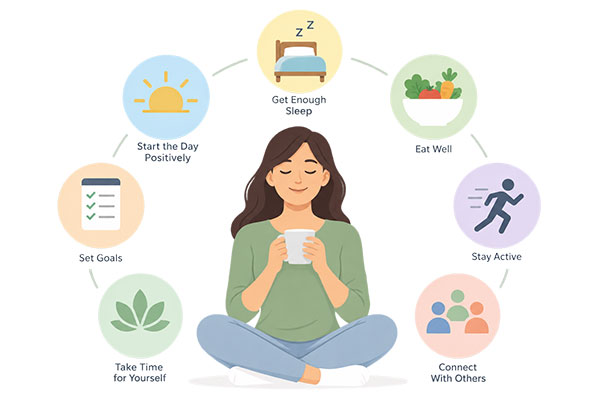
A consistent routine can provide structure and make everyday responsibilities feel more manageable. A routine does not need to be complicated. Simple activities such as getting up at a regular time, preparing meals, completing household tasks, attending appointments, and setting aside time for enjoyable activities can help create a sense of predictability.
It can be useful to break larger responsibilities into smaller steps. When someone is experiencing low motivation or feeling overwhelmed, completing one manageable task can be more realistic than attempting to change everything at once.
A daily routine should also allow time for rest. Mental well being is not improved by constantly being busy. Finding a reasonable balance between responsibilities, relaxation, social activities, and personal interests can support a healthier approach to everyday life.
Priorities Sleep and Physical Well being
Sleep and mental health are closely connected. Poor sleep can affect mood, concentration, energy, and the ability to manage everyday challenges. Establishing regular sleep habits may therefore be one practical area to consider when working towards improved well being.
Physical activity can also support overall health and well being. This does not necessarily mean undertaking intensive exercise. Walking, gardening, stretching, swimming, or participating in another enjoyable form of movement can be a practical way to include physical activity in a routine.
Nutrition and hydration are also important parts of general health. Eating regular, balanced meals and maintaining adequate fluid intake can support the body’s everyday needs.
These habits should not be viewed as a replacement for professional mental health support when someone is experiencing significant or persistent difficulties. Instead, they can form part of a broader approach to well being.
Stay Connected With Other People
Social connection can be an important part of mental well being. Spending time with supportive family members, friends, colleagues, community groups, or other trusted people can reduce feelings of isolation and provide opportunities to talk, participate, and feel connected.
For someone who has become socially withdrawn, reconnecting can feel difficult. Starting with a small step may be more achievable. This could involve having a conversation with someone trusted, attending a community activity, or making time for a shared interest.
Healthy relationships can also involve setting boundaries. Maintaining mental well being sometimes requires communicating personal needs, recognizing unhealthy patterns, and deciding which relationships provide respectful and supportive interactions.
Make Time for Meaningful Activities
Mental well being is not only about reducing difficult emotions. It can also involve building a life that contains activities, relationships, interests, and goals that have personal meaning.
Consider activities that provide enjoyment, achievement, creativity, connection, or a sense of purpose. These may vary significantly between individuals. One person may enjoy gardening or cooking, while another may prefer sport, music, reading, volunteering, learning, or spending time with family.
Setting achievable goals can also create a sense of progress. Goals do not have to be major life changes. Completing a household task, attending an appointment, practicing a coping strategy, or participating in an activity can all represent meaningful progress.
Learn Practical Ways to Manage Stress
Stress is a normal part of life, but ongoing or overwhelming stress can affect well being. Learning practical ways to respond to stressful situations can help an individual develop greater confidence in managing challenges.
Strategies may include taking a short break, practicing slow breathing, going for a walk, writing down concerns, organizing tasks, talking with someone trusted, or identifying which parts of a situation can realistically be changed.
It can also be helpful to distinguish between problems that require action and thoughts or worries that may not have an immediate solution. Developing this awareness can make it easier to focus attention on practical steps rather than becoming overwhelmed by everything at once.
Set Realistic Personal Goals
Improving mental health is rarely an overnight process. Setting realistic goals can make change more manageable and provide a way to recognize progress.
A useful goal should reflect the individual’s circumstances and priorities. Instead of setting a broad goal such as “feel better,” a person might identify a practical objective such as establishing a regular routine, improving communication, attending appointments consistently, becoming more socially connected, or developing strategies for managing stressful situations.
Goals can be reviewed and adjusted as circumstances change. A goal that is appropriate at one point in life may need to be modified later. Flexibility is an important part of sustainable progress.
Consider Professional Counselling Support
Sometimes practical lifestyle changes are not enough, particularly when someone is experiencing ongoing emotional difficulties or challenges that are affecting everyday functioning. Professional counselling can provide a structured and respectful environment in which a person can explore concerns, identify goals, develop strategies, and work towards positive changes.
At Life Enhanced Therapies Bundaberg Counselling, our counselling support services are tailored to the individual. We work collaboratively with participants to understand their experiences, priorities, strengths, and personal goals.
Our support is designed to help participants build emotional resilience, improve daily functioning, and strengthen their capacity to engage in their communities. Rather than taking a one-size-fits-all approach, our counsellors focus on practical outcomes while respecting each person’s unique circumstances and aspirations.
Counselling may provide an opportunity to explore issues that can be difficult to manage alone. It can also help individuals identify practical strategies that fit their everyday lives and support them as they work towards personally meaningful goals.
Take Small Steps Towards Better Well being
Improving mental health in Bundaberg, or anywhere else, does not have to begin with a dramatic change. Small, consistent steps can provide a practical foundation for improved well being. Understanding your emotional health, establishing a manageable routine, prioritizing sleep and physical well being, maintaining supportive connections, participating in meaningful activities, managing stress, and setting realistic goals can all contribute to a healthier approach to everyday life.
It is also important to recognize when additional support may be appropriate. Seeking counselling is not a sign of weakness. Reaching out for support can be a practical decision when personal challenges begin affecting well being, relationships, responsibilities, or participation in the community.
At Life Enhanced Therapies Bundaberg Counselling, we believe effective support begins by listening to the individual. Our counselling services are tailored around personal circumstances and goals, with a focus on respectful collaboration, practical outcomes, emotional resilience, daily functioning, and community engagement.
For someone considering ways to improve their mental health, the most important first step may simply be identifying one manageable change and beginning there. Progress can take time, and each person’s pathway will be different. With appropriate strategies, supportive relationships, and professional assistance when needed, individuals can work towards greater resilience, improved well being, and a stronger ability to participate in the aspects of life that matter to them.